
 Aayojana Ghimire
Analyzing the interview of Finance Minister Dr Yubaraj Khatiwada which was aired on a television a few days ago , the coming days are very difficult for Nepal . The death toll from Corona is now low . If the situation remain as it is then the number of death from corona may not be very large but the number of death from starvation may be significant . All the indicators of economy are imbalanced . Delay in activating the women , who make more than half of the total population , for the direct income work , could make the problem of hunger even worse than the problem of corona .
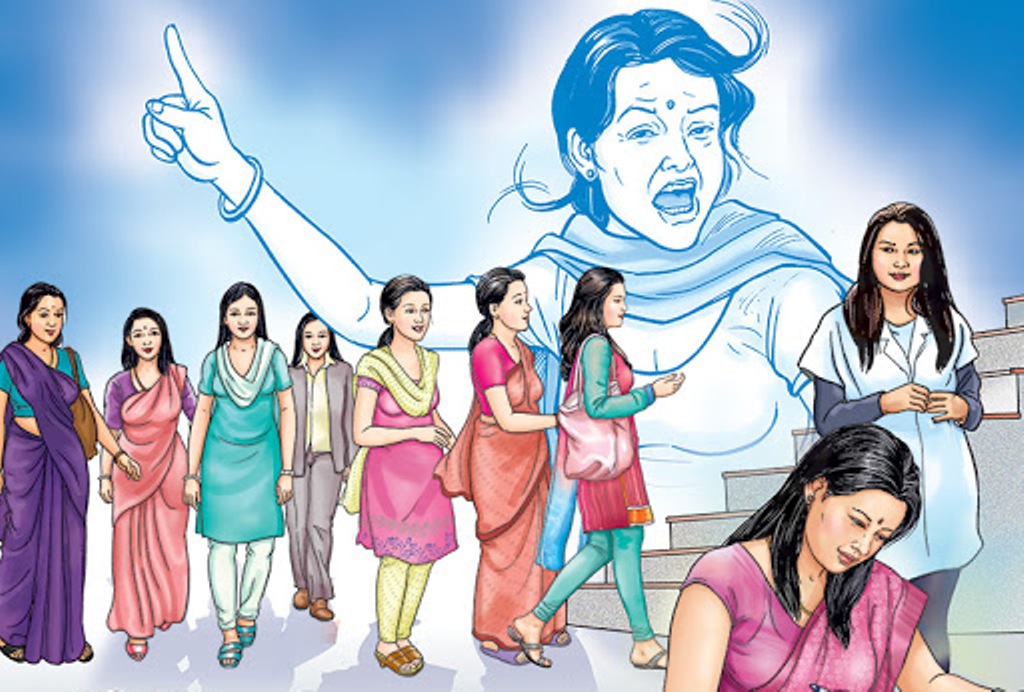
How to increase the participation of women in the current economy ? This should be addressed by government policies and program but wasnt addressed . According to the World Bank , only 2 percent of small and medium enterprises in Nepal are women and only 10 percent in SAARC region . In all SAARC countries , women make up 50 to 51 percent of the population . There is so little involvement in such a large population . Especially in agriculture . But they should not be kept at the same level forever . Now women should be made entrepreneurs and policies should be made to facilitate them . We have to move towards modernizing the old skills .
The state should adopt a policy of moving forward through savings and credit co-operatives . If collective investment can be commercialized , womens work can be integrated into the formal economy . Agribusiness , trade , business , tourism , profession and foreign employment are the major pillars of Nepals economy . But tourism and foreign employment are sure to linger for few years now . The agriculture sector provides employment to 66 percent of total population . Most of them are women . In other words , Nepals agriculture sector is run by women . Men are employed abroad . Nepals agricultural system has not been commercialized . Traditionally , the family contributes about 33 percent to the GDP , even though it is only a morning and evening meal . Womens involvement in agriculture contributes 28.9 percent to the GDP . From time immemorial , the practice of hiring and looking at women as unpaid workers is still the same today .
According to a statistic , 4.3 million youths have gone for formal and informal foreign employment . In recent days , the number of women in foreign employment is also increasing . Women have an equal role in remittances linked to the countrys economy . But violence against women workers abroad puts the foreign employment sector at risk for women .
Despite the large role of women in the Nepalese economy , mainly agricultural workers and small farmers , women have not been able to benefit as much as men from the modernization of economy . Statistics show that despite significant progress in education , health and income generation of elite women , another large female working class is lagging behind . As the difference in wage rate of men and women is increasing . Despite the increase in the wages for both , the gender gap in wages in both the agricultural and non-agricultural sector is widening . In order to reverse this trend in Nepals economic transformation , the state and gender equality activists need to think seriously about how to support womens economic empowerment , how to educate and empower them to compete in the
market by teaching skills .
In the past , society did not realize the importance of entrepreneurship or being an entrepreneur for a women . There was a belief in society as to why women had to do business . In the wealthy family there was a thinking that a women does not need to earn as she have the property of her father or the income of her husband . Now this thinking has changed . In todays society , it has been thought that women should be self-reliant by being active in economic activities . But only this is not enough . From the beginning , women were employed as entrepreneurs only in a limited area . Women entrepreneurship has been developing from small handicrafts , agriculture , cooking etc that can be done at home . Later , the idea that it should be made commercial has also started to come .
There were few women in the service sector such as banking and tourism . Now the number of women towards entrepreneurship is also increasing . Given the opportunity , women have achieved success in all areas . They can also become financially self-reliant if state is able to invest in information , technology and skills by increasing their capacity as per their desires and needs . Women are also doing lots of work socially by investing savings and loans through co-operatives . There are many women entrepreneurs in the hotel business , tourism sector and in communication in urban areas . Some women have made a good living , both individually and collectively , in fishing , collective poultry , animal husbandry , retail trade and boutiques . With the advent of progressive thinking in women , the situation is not the same as in the past and times are slowly changing .
If both men and women are entrepreneurs , the family , society and the country will be benefitted . The economy will be strong. If we move forward with the idea that people should become self-reliant only out of necessity or circumstance , then our development and change in the economic sector will never happen . Women must be capable to raise their voice .
The population of Nepal is 30 million . Of these , the working age population is around 20 million . About half of them live in India , the United States , the Gulf , Australia , Japan and Korea . The size of countrys economy is about 35 trillion rupees . Out of which , Rs. 9 trillion has been received as remittance from the above mentioned countries . For the next few years , remittance inflows are set to decline sharply . More than 25 percent of the economy from remittances is affected by the corona . Similarly , it has been sure that the domestic production will also be reduced by at least 25 percent . Imports and exports have fallen by at least 50 percent . In such a situation , former Finance Minister Surendra Pandey had estimated a 30 percent declination in revenue collection . Our annual revenue target is around Rs. 9 trillion . This Rs. 9 trillion is not enough to cover the ordinary expenses . There are no chances of collecting the revenue Rs. 9 trillion for few years . Only Rs. 6 trillion can be collected for few years as revenue . The state of countrys revenue could not afford to pay the salaries of the employees, pensions, salaries of the peoples representatives and social security allowances .The source of foreign currency earning has run dry . The countries that are providing financial assistance to Nepal are themselves in crisis . Therefore, the possibility of receiving financial assistance for the development has been lost for at least half a decade now.
The only domestic product of the country is agricultural commodities. But even now we are forced to import agricultural commodities worth Rs 1.5 trillion annually. In addition, large quantities of petroleum products and pharmaceutical equipment have to be imported. Now where to get foreign currency for importing these items? How to manage the 5 million young manpower who are on the verge of returning home after losing their job? How to manage the additional 4 lakh young manpower for employment annually? Such important questions are ahead us. Definitely there will be revolt in the country if the solution for these questions is not found quick.