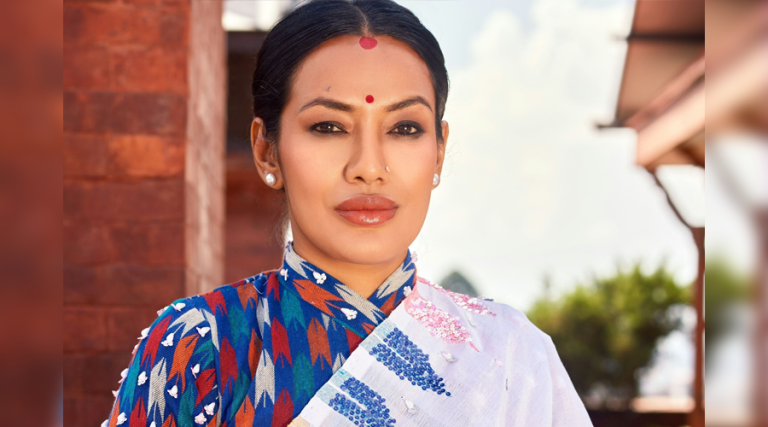


Basanta Bhujel
History and mythology are written in favor of the winners. History and mythology are presented in a very ruthless manner. In the case of Nepal itself, attempts have been made to erase the history of the Sen state. It is found that the winning party has tried to erase the name mark by uprooting the root of the losing party. The same thing happened with Sen. Before the unification of Nepal, the largest, most economically prosperous state in the region was Sen. In fact, the unification of Nepal was the demand and need of the hour. This demand was met by the Gorkhalis, but in the name of fulfillment, an attempt was made to erase the name of Sen Raja and his followers. Historian Dr. According to Rajaram Subeddhi, Sen Raja Khalak was hunted down and enslaved. Those who refused to become slaves were killed. Some fled to the jungle and changed their caste and surname. One of them hid in the forest of Bhujikhola of Baglung. He became Bhujel by mixing with the locals. Even now, there are two types of Bhujels, Sen, and Nisyal. After the situation became normal, the Sen Bhujels came and settled in Tamghas of Gulmi seven generations ago. This was called Bhujelkharka.
A thousand-year-old archeological record has been found at a place called Dobhan in Palpa. Before the establishment of the vast kingdom at Palpa, the capital of Sen Raja was the Dhorpatan region. After the expansion of the state to the Terai and East Sikkim, the Sens left Dhorpatan and made Palpa their capital. It is recorded that the army of that time was 4 times bigger than present-day Nepal. The Sena kingdom extended to the west and south to the river Ganga and to the east to the Brahmaputra River. To the north were the states of 22 to 24 C and Nepal, but these states were also under the control of the Sen Kings. In time, King Sen divided the kingdom among his brothers and sons. Palpa, Tanuha, and Makwanpur were divided into three states. The Sen Kings began to quarrel with each other. Rejoiced in the merriment. Seeing this, it was found that the brothers of the Sen kingdom had persuaded King Prithvi Narayan Shah of Gorkha to unite.
There is some confusion in the history writing about how Prince Drabya Shah of Lamjung became the king of Gorkha. In fact, the Gorkhas were also under the control of the Sen kingdom. Drabya Shah got the Gorkha kingdom as dowry after marrying Sen Raja’s daughter. Not only the state but also the Sen State had sent its princess along with learned guru priests and dignitaries. Dravya Shah’s Rajguru was Narayandas Ajryal of Isma under Sen Rajya.
According to the Shah genealogy, the Gorkhali kings seem to have married the daughters of Sen Raja. Dravya Shah’s grandson Ram Shah was married to Mukunda Sen’s third son Bhringisen’s granddaughter Vishnavati (Nayanavati). Prithvi Narayan Shah’s father Narabhupal Shah’s mother comes to see the daughter (Mallikavati) of King Damodar Sen of Tanahun. Narabhupal Shah was born in Tanahu. Narabhupal Shah had four married queens and two inner queens. Narabhupal Shah’s second marriage was to Kaushalyavati, daughter of King Gandharva Sen of Palpa (daughter-in-law of Princess Chandraprabhavati of Jethi Rani Khanchi) and his fourth marriage was to Princess Subhadravati of Tanahun. During the conversation after his younger uncle Yuvaraj Udyot Sen of Palpa reached Gorkha during the pilgrimage. Prithvi Narayan had received the admonition, “I think its rider is a fresh Turkish horse. I think it will be ridden sooner.”
Prithvi Narayan Shah’s first marriage took place at the age of 15. In 1794, he married Indra Kumari, daughter of King Hemkarna Sen of Makwanpur. After Prithvinarayan became the king of Gorkha in 1799 BS, his father-in-law Hemkarna Sen brought the first sword, which he had diligently prepared for a year, with the help of skilled craftsmen from India, to encourage his son-in-law. Similarly, the second marriage in 1796, between Gorakhpur and Banaras, he married Narendra Lakshmi, daughter of Ahiman Singh Rajput (Nawaran’s name (Dayaram Singh)) of West Ara district of Bihar province. Shah was married to Vidyalakshmi, daughter of King Mahadatta Sen of Palpa.
During the reign of Rajendra Laxmi, while the Gorkhas were advancing to the east, Lamjung captured the Gorkhas. Feeling jealous of his widowed daughter, King Mukundasen II of Palpa sent a large army to help. The army chased the king of Lamjung to Kaski. He reached the mountain. Gorkhali fought a fierce battle with 22 to 24 states that came to help Lamjung, Kaski, and Parbat. If not for Palpa, Gorkhali would have lost the war. But due to the support of Palpa, the Gorkhali army defeated the army from 22 to 24 and reached Doti and Jumla. During the process of state unification, Prithvinarayan Shah continued to gain power only in the northern part of the Sen state. After the unification of Nepal, the southern region of the Sen states automatically came under British rule. There were three Sen kingdoms in the eastern hills, the lower western hills, and the Terai. The capital of Palpa was almost as far as Gorakhpur. The winter capital of the Sena kingdom called Tanahu was at Betiya Ramnagar in present-day India. The military kingdoms of Makwanpur and Vijaypur extended as far south as the Ganges.
Only the forest south of Chure and the small populated area south of the forest seems to have been brought within the borders of Nepal by Prithvi Narayan Shah and his sons and daughters during the unification of Nepal. During the reign of his grandson Ran Bahadur Shah, Nepal lost the war with the British. After losing the war, the Sugauli Treaty was signed. During the Treaty of Sugauli, the entire area south of Chure of Nepal, from Mahakali to West Spatial and from Mechi to East Tista came under British control. A few years later, the Terai region from Dang to Butwal and from Parsa to Jhapa was returned by the British. During the reign of Jung Bahadur Rana, the Terai region from Banke to Mahakali was also returned to Nepal by the British.
Historically, Nepal has gone through several stages of state unification and division. If you look at the map of the Mahabharata period, it is seen that there are two powerful countries in this region, Nepal in the east and Uttaranchal in the west. Is the map fictional or realistic? This is not the case. It is mentioned in the Puranic texts that the kingdom of Janakpur existed in this area in the pre-Mahabharata period. Pundits say that the name of Nepal is mentioned in the oldest scripture Veda. But the myths alone do not confirm this.
In fact, all the borders occupied by the Sen states are automatically Nepal’s. Because the Sen Kings had accepted the rule of Nepal. Even if that is not possible, we have to claim the border before the Sugauli Treaty. Because the Sugauli Treaty is with the UK. The Treaty of Sugauli was automatically rescinded after Britain left South Asia. It may be difficult to get back the territory of Sen state, but if the country gets skilled politicians, the territory before the Sugauli Treaty can be returned. The UK can also be convincing in this matter. Because our maps and evidence are still preserved in the UK library. On this basis, we must be able to shake up the United Nations. This time such an opportunity has come. India also understands this. India does not have good relations with any of its neighbors. The Indian people want the relationship with Nepal to deteriorate. If the Indian people and their scholars are to be made aware of the fact that injustice has been done to Nepal, they can put pressure on the government of their country not to do injustice to Nepal.
Because Nepal and India have a very good relationship at the grassroots level. Even when the government imposed a blockade, the Indian people have been secretly providing essential goods to the Nepali people. We will not miss this opportunity. We need to be united. Even if we have differences of opinion in other matters, let us not have differences of opinion in matters of nationality. If there is a difference of opinion, the downfall of any large and prosperous nation is certain. How did such a huge Sen kingdom fall? How did such a small Gurkha state become strong? It is enough to find the answer to that question. Because the Gorkhas had only one king, but there were three kings in the Sen kingdom, even in the then Nepal (Kathmandu, Lalitpur, Bhaktapur) there were three kingdoms. Even though the republic came to Nepal in principle at this time, there are many kings in practice. When there are many kings, the country becomes weak, so the country must move forward with only one king. Only then will the country take a leap.
(Bhujel is a retired engineer in the British Army)