
- Basant Bhujel
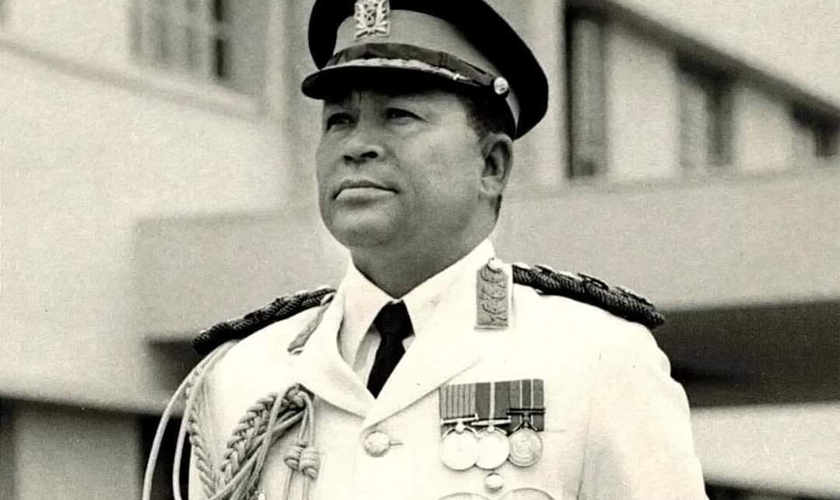
Former Inspector General of Nepal Police (IGP) Khadgajit Baral passed away on Wednesday morning. First of all, I pay a heartfelt tribute to him on this 13th anniversary.
Baral was born as the youngest son of Captain Bahadur Singh Baral and Saraswati Baral. He served in the Nepal Police from 2013 to 2035 BS. He was the Resident Nepali Ambassador to Burma (now Myanmar) from 2036 BS to 2042 BS. He also served as non-resident ambassador to Indonesia, Singapore and French Indo-China (Laos, Cambodia and Vietnam). He became a member of the Rastriya Panchayat from 2042 BS to 2046 BS.
Baral, who has been leading the Nepal Police for six years, is known as the ‘Father of Nepal Police’. Baral had taken the lead for today’s structure and service facilities of Nepal Police. He was also involved in the diplomatic and political spheres after the police service. While Baral was leading the Nepal Police, other facilities including rations and other facilities were started for the Nepal Police. In the Nepal Police, Bhishma Pitamah is considered to be one of the richest and most glorious personalities and a multi-faceted talent and character.
Baral was appointed Inspector General of Nepal Police at the age of 44. Baral is the only IGP in Nepal Police for six years. Baral is the first post-graduate police officer to become an IGP. He had graduated from the police service in 2013 BS. Baral’s family background was from the British Army. His father and brothers were in the British Army. His ancestors were in the Nepal Army and participated in the war against the British. He later enlisted for the British Army in India and continued to do so for generations. Baral was a good hockey and football player.
Democracy fighter Khadgajit Baral has been treated unfairly. The biggest movement for the restoration of people’s rights in Nepal is the ‘People’s Revolution of 2007′. Khadgajit Baral had participated in this people’s revolution by stealing his father’s gun. Baral has made a great contribution not only in the acquisition of arms but also in the training of the People’s Liberation Army.
After the completion of the People’s Revolution of 2007, other leaders and commanders involved in the movement became ministers or governors. He was outraged that the achievements of the revolution had yet to be concluded. What could be more ironic than this? Baral was saddened when the same party in which he had joined the revolution agreed to the incomplete achievement. Although the Nepali Congress could not appreciate his ability and contribution, King Mahendra did. He joined the Nepal Police. In a short time, the highest rank of Nepal Police became IGP. No one is upset that Baral has contributed the most to bring the Nepal Police to its present state.
I first met Baral at the Rotary Club of Pashupati. I belonged to the club where he was president. At that time, he had retired from the post of IGP and served as the Ambassador of Burma for four years and as a Member of Parliament (then a member of the then Rastriya Panchayat) for five years. In terms of rank, Ambassador and Rapunzel are much higher than IGP. But he was proud to introduce himself as a former IGP. Bahalbala did not look less than the IGP, his small personality and personality. All Rotarians bowed to his orders and what is social service really? How can this be done? I have had the opportunity to learn that lesson from him. The hard and stern nature of the outside, the tender and loving heart of the inside.
Baral has a big hand in giving me the Rotary International’s Paul Harris Foundation Award. In fact, the Nepal Police suffered greatly during the Maoist insurgency. Thousands of policemen were killed. His widows were divorced. The state did not care. The soldiers’ widows were in a dilemma as to what to eat and what to wear. During that crisis, Baral started a campaign to make them self-reliant by imparting skill-based training including sewing and weaving. Not only did they learn the skill but they also became self-reliant by giving away sewing machines.
He launched a special campaign for disabled and physically challenged children. I also had the opportunity to play a supportive role in his campaign to restore the normal function of children with cleft palate and cleft lip. There are no children with cleft lip in Nepal now. As soon as you see it, Rotary takes you for free treatment. Its foundation was laid by Baral.
He is the one who started the work of providing mobile health care in remote places of the country. That is what many are doing right now. He worked 24 hours a day. Sometimes I would get his phone call even in the middle of the night.How lively he not only taught me social service, how does the state work? His understanding was no less than that of any politician. Later, while playing golf, I started meeting Baral. The Royal Golf Club had a large crowd of people with access to the power center at that time. I was probably the strongest in the crowd. But he showed me the most intimacy. He made me a member by giving me a golf stick.
Baral is lucky to have lived a very long life. Even after retiring from the IGP, he had the opportunity to become an ambassador and a member of the Rastriya Panchayat for about 10 years. Even during that period, he registered his name as the most successful ambassador. After the restoration of democracy in 2046 BS, he was overshadowed. In the name of contributing to the 2007 revolution, the controversial former IGP was made an assistant minister by the Nepali Congress, but no one remembers Baral who had so much experience, ability and contribution. And he did not fail in his duty towards the motherland through social service. He spent three decades after 2046 BS as an active social worker.
Even in the last period of his life, there was such a large crowd at his residence (in front of the gate of Maharajgunj Police Hospital) that I did not see such a large crowd even where there was an IGP. The spacious compound of his house was always full. Bahalbala police officers used to come to his residence to seek advice and suggestions. Even after over 90 years, I did not see any decrease in his enthusiasm, vigor and consciousness. Kapcha reached every corner of the country while walking hand and foot. Thanks to everyone’s good wishes, he remained active till the age of 93.
Born and raised in an affluent family, Baral was also financially strong. He kept his family under the same discipline as the police. His main mantra was that the police is a social worker wearing a uniform, not just working. Assimilating this motto, he instructed his grandson to be on duty like other youths by recruiting temporary police personnel in the local elections to understand the duties and discipline of the police. His grandson Pujan Baral had followed his grandfather’s instructions by performing his duty in a booth at a school in Maharajganj like other temporary policemen. Baral had sent his grandson to the place to dedicate himself to the spirit of national service.
People call Ganeshman Singh the Iron Man. I like to call former IGP Baral Satisal. In fact, Baral was instrumental in ending the Rana rule.
After the revolution of 2007, I think it was better for the country to have police service instead of politics. If he had continued his politics, he would have had to rot in jail like other leaders, or he would have been on the list of those who betrayed the motherland by becoming foreign pimps. But he decided to join the police service. It had been more than five years since the establishment of the Nepal Police when he joined the police organization. The army, which has a history of hundreds of years, could not even accept the existence of the Nepal Police. Nepal Police did not have access to the palace. In such a situation, protecting the police organization and making it more capable than the army was no less a challenge. He succeeded in introducing his abilities to King Mahendra and Virendra. In fact, he was the unannounced security adviser to the court.
Unsuccessful leader Successful diplomat
Baral cannot be called a successful politician. Until now, he has not been as successful as another IGP. But few know about his diplomatic ability and success. In fact, so far no one has been as successful as Baral as Nepal’s ambassador to another country. He has left the mark of ‘ghost or future’ while serving as Verma’s ambassador for six years. Which is briefly discussed.
When Baral became the ambassador to Burma in January-February 2036 BS, the population of Nepalis there was around three and a half million. Due to the strict military rule of the then General Ne Win, many civil rights were restricted. In such a situation, each Gorkhali had at least two or four hundred cows. He was free to enter any forest and cultivate as much land as he wanted. All the cultivated land was permanently his own. So they had no shortage of land.
However, most Nepalese in Burma were living there as second-class citizens. They were also banned from traveling to Burma without permission as they only had an FRC (Foreigner Registration Certificate). He did not have the same rights as other Burmese. They were deprived of the opportunity of government service.
They were also banned from taking doctoral and engineering courses. They were not even allowed to register the company. Therefore, most of the Nepalese in Burma depended on agriculture for their livelihood. They were saddened to be forced to live as refugees without rights. Two or three hundred Nepalis used to queue at the embassy in Burma every day for visas and passports saying ‘let’s get back to Nepal’.
Although they returned to Nepal, it was not easy to get Nepali citizenship. They did not understand this reality. When he returned to Nepal, his diary was sure to become more difficult. Realizing this, Ambassador Baral tried to grant them Burmese citizenship. In that endeavor he succeeded. In Verma’s Nepali community, the Nepali language and culture were on the verge of extinction. Ambassador Baral wanted Nepalis in Burma to preserve their Nepaliness. The new regime in Burma, which does not like foreign interference in its internal affairs, could not easily implement the new thing.
Even in such a situation, Baral has taken the lead in preserving the Nepali language and culture as well as Hinduism in Burma since he took over as ambassador. It was not possible to establish a separate school for Nepalese at a time when languages other than Burmese could not be taught in Burmese schools. In order to save the Nepali language from extinction, books in Nepali language from class 1 to 4 were requested from Nepal on Baral’s initiative. Under his direction, Nepalese in Burma were asked to set up Nepali foya (temples) in many places to read Mahendramala and those books on social studies, which were carried in diplomatic bags. Statues of Rama, Krishna, Shiva and Goddess were placed around each foya. This increased religious tolerance and facilitated the teaching of the Nepali language.
As in Nepal’s independent Panchayat system, the Nevin government banned organizations in Burma. In such a situation, Baral registered the ‘Akhil Burma Deshi Hindu Gurkha Sangh’ in the year 2038/39 with the consent of the concerned government officials after one year of continuous efforts. Under the same association, the teaching of Nepali language gained momentum. As a result, Nepalese in Burma are still able to speak and write Nepali.
In order to keep the originality of Nepal alive, under Baral’s direction, arrangements were made to sew Nepali clothes by drawing lists from Nepal. Daura Surulal, Eastcote, Chaubandi Cholo, etc. are still in existence in Burma.
Around 2039 BS, a Nepali Literary Conference was organized in Burma under the leadership of the then Ambassador Baral. At this conference, it was decided to start publishing the first Nepali quarterly magazine called ‘Airavadi’. Airavadi magazine continued for about three decades.
Similarly, it was decided to celebrate ‘Bhanu Jayanti’ in Burma every year on the 29th of Asar every year under the leadership of Ambassador Baral so that the great poet Bhanubhakta Acharya would always be in the minds of Burmese Nepalese as a national hero. The first Bhanu Jayanti program was organized in Burma on the 29th of Asar 2040 BS on the initiative of Baral. The tradition of celebrating Bhanu Jayanti has been continuing in Nepali settlements till now.
When Baral was ambassador to Burma, the Burmese always wanted to see Pashupatinath in front of him. Even though they could not be taken to Nepal, Baral decided to bring Pashupatinath to Burma. Under Baral’s leadership, Nepali sculptors were asked to make a statue of Lord Pashupatinath and take it to Burma. On 22 April 2041, Ambassador Baral inaugurated the Pashupatinath Temple based on Nepali architecture in a grand ceremony at the then Memyo in Burma. The temple, a symbol of religious unity for Burmese Nepalese, celebrates a three-day fair every year in April. They have also been celebrating Mahashivaratri, Teej and other festivals in the same temple.
In addition to this, the temple is also becoming known as an important place for social reconciliation and discussions on ethnic interests. It also connects Burma with Nepal spiritually. In February and March of 2036 BS, the then King Birendra visited Burma. The visit helped in the campaign by the Burmese government to declare Nepal a ‘zone of peace’. Burma became the third country to accept Nepal’s peace zone proposal.
In the end,
an era has come to an end. The living history of Nepal Police has come to an end. But even though the body is dead, Baral’s contribution is not dead. His biography is a source of great inspiration for future generations. Nepali people have to wait for many years to give birth to such worthy sons. Nepal Police does not know how long it will take to get such IGPs. If you look at the fate of most of the IGPs after him, everything is clear.